 Executors step in after a death to carry out the Will and deal with practical and legal steps, including probate where required.
What Is an Executor of a Will? NZ Guide to Executors and What They Do
When you make a Will in New Zealand, one of the most important decisions you make is choosing an executor.
An executor is the person (or people) legally responsible for carrying out the instructions in your Will after you die. While the role sounds formal, the purpose is simple: to make sure your estate is handled properly and your wishes are followed.
This guide explains what an executor is, what they do in New Zealand, and what you should think about when choosing one.
1. What is an executor?
An executor is the person named in your Will to manage your estate after your death.
Their role begins once you pass away and continues until your estate has been fully dealt with. This can take months, and in some cases longer, depending on the size and complexity of the estate.
Executors have a legal duty to act honestly, carefully, and in the best interests of the beneficiaries named in the Will.
2. Why are executors important in a Will?
Without an executor, there is no one with clear legal authority to carry out your wishes.
Executors provide structure and accountability. They ensure that your assets are collected and protected, debts and expenses are paid, and your estate is distributed exactly as your Will says.
Choosing the right executor can make a difficult time much easier for your family.
3. Who can be an executor in New Zealand?
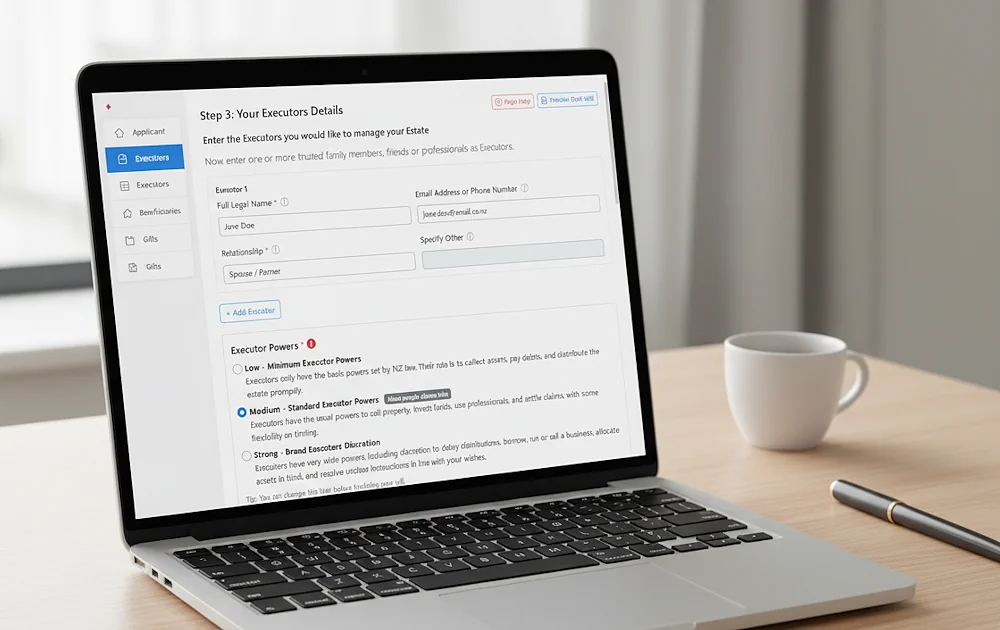 Most people choose a trusted person who is organised, steady under pressure, and comfortable handling paperwork.
In New Zealand, almost any adult can be an executor, provided they are over 18 and mentally capable.
Common choices include a spouse or partner, an adult child, a trusted family member or friend, or a professional executor such as a lawyer or trustee company.
You can appoint more than one executor. Many people choose to do this so the responsibility is shared, or so there is a backup if one person cannot act.
4. What does an executor actually do?
The executor's job covers both legal and practical tasks. While every estate is different, the core responsibilities are usually the same.
5. Probate - the first legal step
In many cases, the executor must apply for probate through the High Court of New Zealand.
Probate is the legal process that confirms the Will is valid and the executor has authority to act.
Small estates or jointly owned assets may not require probate, but many do.
6. Key tasks executors handle
An executor's responsibilities often include:
- Locating the original signed Will.
- Organising funeral arrangements (where required by the family).
- Applying for probate.
- Identifying and valuing assets (bank accounts, property, investments).
- Paying debts, expenses, and taxes.
- Keeping records and communicating with beneficiaries.
- Distributing the estate according to the Will.
Executors must act carefully and keep clear records throughout the process.
7. Executor vs administrator - what's the difference?
An executor is appointed in a Will.
An administrator is appointed by the court when there is no Will, or no executor is able or willing to act.
Both roles are similar, but having a Will and an executor usually makes the process much simpler.
8. Common questions about executors in NZ
 Choosing the right executor reduces stress and helps things run smoothly for the people you care about.
Can an executor also be a beneficiary?
Yes. This is very common and legally allowed in New Zealand.
Do executors get paid?
Family executors are usually unpaid unless the Will allows payment. Professional executors typically charge fees.
Can an executor refuse the role?
Yes. An executor can decline, but this is best done early, before probate is granted.
Choosing an executor when making your Will
When choosing an executor, look for someone who is trustworthy and organised, comfortable handling paperwork, and able to deal calmly with family matters.
If you are making a Will online, choosing the right executor is one of the most important steps in the process.
If you have already been named executor and want a practical checklist, read our step-by-step guide:
Executor Duties in NZ: A Step-by-Step Guide.
Ready to create your NZ Will?
Start your DIY Will now, finish later, and pay only when you're done. Or book a Consultation for in-depth personalised guidance and complex Will tailoring.
DIY Will
Best for straightforward Wills. Finish in around 30 minutes. Preview as you proceed, then pay at the end, once completed. $99.
Start Your DIY Will
Consultation
Best for complex Wills or if you want expert guidance. Dedicated 1 hr Consultation with in-depth personalised and tailored support. $149.
Book Consultation
No payment for DIY until the end. Start now and come back to finish later.
Need help choosing? View DIY Will and Consultation details.
Related Will writing resources