Named as an Executor in New Zealand? This step-by-step guide explains what to do first, when probate is needed, and how to administer an Estate properly.
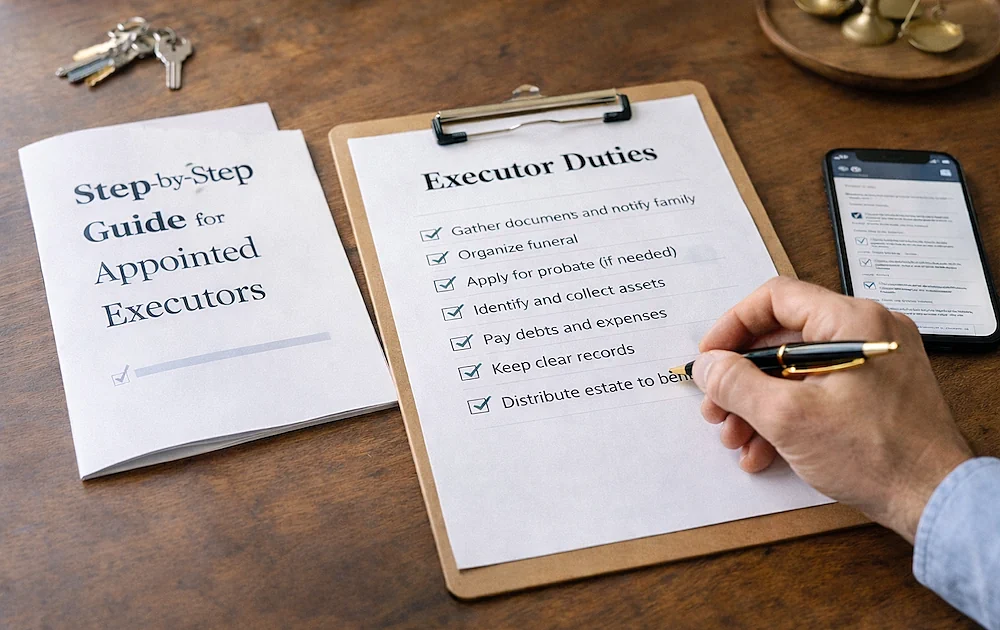 If you have been named Executor, take it step by step. Most Estates follow a clear process, even if it feels overwhelming at first.
Being named Executor of a Will is an important responsibility. Many people feel unsure about what to do first, especially while grieving.
This guide walks you through the Executor's role in New Zealand, step by step, in plain English.
Not sure what an Executor is? Start here:
What Is an Executor of a Will? NZ Guide.
1. You've been named Executor - now what?
Your role begins when the person who made the Will dies.
You do not need to act immediately, but you should take reasonable steps to secure important documents and assets and understand what the Will requires.
2. Find the original Will and notify family
Locate the original signed Will. This may be held at the deceased's home, with a lawyer or trustee, or in a safe or secure storage.
Notify close family members and Beneficiaries that you are the Executor.
3. Organise funeral
Funeral wishes are often included in the Will or discussed with family beforehand.
While Executors often help coordinate arrangements, decisions are usually made together with the family.
4. Apply for probate (if required)
If probate is needed, you will apply to the High Court of New Zealand.
You may need the original Will, a death certificate, and a formal probate application.
Once granted, probate gives you legal authority to deal with the Estate.
Our Complete Guide to Probate in NZ explains when probate is required, what documents are usually needed, and what happens after probate is granted.
5. Identify and collect assets
As Executor, you must identify everything the Estate owns, including bank accounts, property, investments, vehicles, and personal belongings.
Assets may need to be valued before distribution.
6. Pay debts, taxes, and expenses
Before distributing anything to Beneficiaries, you must pay outstanding debts and cover funeral and administration costs.
You may also need to address tax matters with Inland Revenue.
Executors should not distribute assets too early. If you distribute before debts are dealt with, you may create problems for yourself and the Beneficiaries.
7. Keep clear records
You should keep accurate records, including money received and paid, decisions made, and communications with Beneficiaries.
Clear records protect both you and the Beneficiaries.
8. Distribute the Estate to Beneficiaries
Once all obligations are met, you can distribute the Estate exactly as the Will directs.
This may involve transferring money, transferring property, and handing over specific items.
9. Common challenges for Executors
Executors often face family disagreements, delays with probate, and complex assets or debts.
Taking your time and seeking advice early can prevent problems.
10. When to get legal or professional help
You can ask for professional help if the Estate is complex, there are disputes, or you are unsure about your duties.
Getting advice does not mean you have failed. It is often the responsible choice.
Final thoughts
Being an Executor can feel daunting, but most Estates in New Zealand follow a clear, manageable process.
If you are making a Will, choosing the right Executor makes a real difference. If you have been appointed Executor, taking things step by step will help you carry out the role confidently and correctly.