This plain-English guide explains what probate means in New Zealand, when it is needed, when it may not be needed, how long it takes, what it costs, and what Executors need to do after probate is granted.
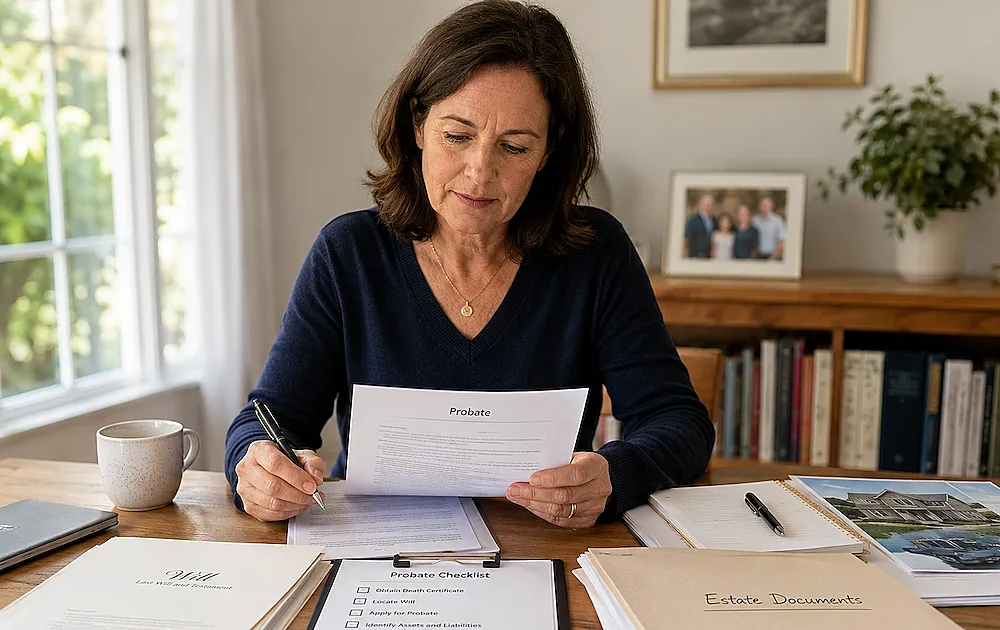 Probate is one step in Estate administration. Executors still need to collect assets, pay debts, keep records, and distribute the Estate carefully.
When someone dies in New Zealand, their family often has to deal with banks, property, KiwiSaver, insurance, debts, personal belongings, and the deceased person's Will.
If there is a Will, the person named as Executor may need to apply for probate before they can properly deal with the Estate.
Probate is the High Court process that confirms a deceased person's Will and gives the Executor legal authority to administer the Estate. In practical terms, probate is often the document banks, KiwiSaver providers, share registries, insurers, and Land Information New Zealand may need before they will release, transfer, or allow the sale of assets.
Not every Estate needs probate. Some small Estates can be dealt with without a High Court order. Jointly owned property may pass automatically to the surviving owner. But where the Estate includes land, a house, or significant assets held in the deceased person's sole name, probate is often required.
This is general information, not legal advice. If an Estate is complex, disputed, involves overseas assets, or there is uncertainty about the Will, the Executor should get legal advice.
What is probate in NZ?
Probate is a formal order from the High Court confirming that a Will is valid and that the Executor named in the Will has authority to administer the Estate.
A Will usually names one or more Executors. The Executor is the person responsible for carrying out the Will-maker's instructions after death. That may involve collecting assets, paying debts, dealing with tax, selling or transferring property, and distributing the Estate to Beneficiaries.
Probate matters because many organisations will not simply accept a copy of the Will or a family member's word that they are allowed to deal with the Estate. They may require a High Court grant of probate before they will release money or transfer assets.
| Term |
Meaning |
| Will-maker | The person who made the Will |
| Executor | The person named in the Will to administer the Estate |
| Estate | The deceased person's assets and liabilities |
| Probate | The High Court order confirming the Will and Executor's authority |
| Beneficiary | A person or organisation receiving something from the Estate |
The Ministry of Justice probate guidance explains that a probate application is required from the person or organisation named as Executor in the will. It also explains that if someone dies without a will, the process is different and may require letters of administration instead.
When is probate required in New Zealand?
Probate is usually required when the Executor needs formal authority to deal with significant assets in the deceased person's sole name.
Common situations where probate may be needed include:
- The deceased owned a house or land in their sole name
- The deceased had significant money in a bank account
- The deceased had KiwiSaver funds that cannot be released without a grant
- The deceased owned shares or investments
- An insurer, bank, fund manager, or institution asks for probate
- The Estate value is above the small Estate threshold
- There is uncertainty about who has authority to deal with the Estate
The Ministry of Justice says that if the deceased person's property includes land or a house, an application to the High Court is usually needed, and the type of application depends on whether the person left a Will.
Useful way to think about it: Probate is not needed just because someone has died. Probate is needed when the Executor needs legal authority that other people or institutions will recognise.
That is why the answer often depends on the assets involved. For example, if a person dies with a jointly owned family home and a small personal bank account, probate may not be needed. But if they owned a house in their sole name, or held significant funds in their own name, probate is more likely to be required.
The NZ probate threshold: $40,000 and small Estates
One of the most important probate changes in New Zealand is the increase in the small Estate threshold.
The Ministry of Justice announced that the financial threshold at which the High Court needs to approve the distribution of assets when someone dies increased from $15,000 to $40,000. The Ministry says this change came into force on 24 September 2025.
This matters because some smaller Estates may now be handled without a High Court probate or administration application.
However, the threshold needs careful wording. It does not mean probate is never needed if the Estate is under $40,000.
Safer practical wording: Probate may not be required for some smaller Estates, but the answer depends on the type of asset, how the asset is owned, the value held by each institution, and what the relevant bank, KiwiSaver provider, insurer, share registry, or other organisation requires.
Probate threshold examples:
- A small bank balance may be released without probate.
- A jointly owned home may pass to the surviving owner outside probate.
- A KiwiSaver provider may have its own release requirements.
- A house in the deceased person's sole name will usually require formal authority, even if other assets are simple.
- Different institutions may ask for different evidence before releasing money.
This is an important point because many older probate articles still refer to the previous $15,000 threshold. For a current NZ probate guide, the $40,000 threshold should be explained clearly, but not overstated.
When probate may not be needed
Probate may not be needed if the Estate is simple, low-value, and does not include land or significant assets in the deceased person's sole name.
Jointly owned property
If a couple owns a house as joint tenants, the property may pass automatically to the surviving owner by survivorship. In that case, probate may not be needed for that asset.
This is different from property owned as tenants in common. If the deceased owned a defined share of the property, that share forms part of the Estate and may need to be dealt with under the Will.
Small bank balances
Banks may release smaller balances without probate if they are satisfied with the evidence provided. They may ask for documents such as a death certificate, Will, identification, indemnity, or statutory declaration.
Small KiwiSaver balances
KiwiSaver usually forms part of the deceased person's Estate. However, some providers may have small-balance processes where probate or letters of administration may not be needed below a particular amount. Because provider policies can vary, the Executor should check directly with the KiwiSaver provider.
Personal possessions
Household goods, clothing, furniture, photographs, jewellery, and personal items may often be dealt with by the Executor or family without a formal court order, provided there is no dispute.
Assets with direct Beneficiary arrangements
Some assets may pass directly to a nominated person, depending on the product and provider rules. This should be checked carefully because not every nomination works the same way in New Zealand.
The practical first step is simple: list the assets, identify how each asset is owned, and ask each institution what authority it requires.
Probate vs letters of administration
Probate and letters of administration are both High Court orders used to give someone authority to deal with a deceased person's Estate. The difference depends mainly on whether there is a valid Will and whether an Executor can act.
| Situation |
Likely process |
| There is a valid Will and the Executor can act | Probate |
| There is no Will | Letters of administration on intestacy |
| There is a Will but no Executor can act | Letters of administration with Will annexed |
Probate
Probate confirms the Will and authorises the Executor named in that Will.
Letters of administration
Letters of administration are used when there is no Will, or where the Will exists but the Executor cannot act. The person appointed by the court is called the administrator, not the Executor.
If there is no will, the Estate is distributed according to New Zealand intestacy rules under the Administration Act 1969, rather than according to personal instructions in a will.
This is one reason a clear Will matters. Without a Will, the family may face extra delay, extra cost, and less control over who administers and receives the Estate.
The Will Kit Generator guide to NZ will law explains more about how Wills work generally.
Who applies for probate?
The Executor named in the Will applies for probate.
There may be one Executor or multiple Executors. A good Will also names a backup Executor in case the first Executor has died, is unwilling to act, is overseas, or cannot manage the role.
Executor situations can become more complicated where:
- One Executor has died
- An Executor does not want to act
- Multiple Executors disagree
- An Executor lives overseas
- The Will names a professional trustee company or lawyer
- The original Will cannot be found
- There are handwritten changes or unclear wording
- A later Will may exist
If more than one Executor is named, all Executors do not always have to take an active role, but this needs to be handled correctly. An Executor may renounce, reserve power, or apply with the others depending on the situation.
Because probate is a court process, the Executor needs to make sure the application accurately reflects who is entitled to apply.
For a broader plain-English explanation of the role, read What Is an Executor of a Will? NZ Guide.
What documents are needed for probate?
A probate application usually requires the original Will, evidence of death, court documents, an affidavit, and supporting information about the Estate.
The Ministry of Justice currently refers to forms including PR1AA, PR1, and PR7, and notes that probate forms are not simple "fill in the blank" forms. This is important because some secondary sources and older articles refer to different or outdated form labels. The official Ministry page should be treated as the safer source for current filing requirements.
Common documents and information may include:
- The original Will
- Death certificate or other evidence of death
- Application for probate
- Affidavit from the Executor
- Draft probate order
- Information about Estate assets and liabilities
- Evidence explaining any unusual issue with the Will
- Filing fee
- Identification or authority documents where required
Examples of unusual issues include:
- The Will has damage
- The Will has marks, staples removed, or alterations
- The Will was signed incorrectly
- The original Will is missing
- There are competing Wills
- The deceased used different names
- The Executor named in the Will has died
- The Will was made overseas
Mistakes in probate documents can lead to requisitions. A requisition is where the court asks for an issue to be corrected or explained. Requisitions can delay the grant.
How to apply for probate in NZ
The probate process usually follows these steps.
1. Find the original Will
The Executor needs the original signed Will. A photocopy or scanned copy may not be enough unless the court accepts evidence explaining why the original cannot be produced.
The original Will might be held by the deceased person, a lawyer, Public Trust, a trustee company, a family member, or in a safe, filing cabinet, or bank storage facility.
2. Confirm who the Executor is
Read the Executor clause carefully. Check whether there are multiple Executors and whether a backup Executor is named.
3. Identify Estate assets and liabilities
The Executor should make a preliminary list of bank accounts, KiwiSaver, shares, investments, real Estate, vehicles, insurance, business interests, debts, credit cards, mortgages, tax obligations, and funeral expenses. This helps determine whether probate is required.
4. Check whether probate is actually needed
Before preparing a full application, the Executor should ask each relevant institution what it requires. Banks, KiwiSaver providers, insurers, and registries may each have their own requirements.
5. Prepare the High Court documents
The Executor or their lawyer prepares the application, affidavit, draft order, and supporting documents. The Ministry of Justice says many Executors ask a lawyer to prepare and file the application, and that court staff cannot give legal advice.
6. File the application and pay the fee
The Ministry of Justice probate page gives filing instructions, fee information, forms, and guidance on getting a copy of a Will. It also states that the original document must still be sent to the court even where payment is made through File and Pay.
7. Respond to any court questions
If the court has concerns or needs clarification, it may issue a requisition. The Executor must correct or explain the issue before probate can be granted.
8. Receive the grant of probate
Once granted, probate confirms the Executor's authority. The Executor can then use the grant to deal with Estate assets.
How long does probate take in NZ?
Probate timing should be separated into three different timeframes:
| Stage |
What it means |
Practical timing |
| Preparation | Finding the Will, confirming assets, preparing documents | Days to weeks |
| Court processing | High Court reviews and grants probate | Often weeks, depending on completeness and workload |
| Estate administration | Collecting assets, paying debts, resolving claims, distributing Estate | Often several months or more |
The Ministry of Justice announced in 2025 that its internal standard was to complete 75 percent of probate applications in 15 working days, and that as at June 2025, 89 percent were completed within that timeframe.
That does not mean every Estate is finished in 15 working days. It refers to court processing of probate applications, not the whole Estate administration process.
A simple Estate may be mostly dealt with within several months. A complex or disputed Estate can take a year or more.
Key point: Probate is one step in Estate administration. It is not the same thing as finishing the Estate.
How much does probate cost in NZ?
The Ministry of Justice currently lists the filing fee for probate and letters of administration as $269. It also lists a $40 fee to search probate court records.
That filing fee is only the court fee. Other costs may apply.
Probate costs can include:
- High Court filing fee
- Lawyer or professional probate service fees
- Trustee company fees
- Accountant fees
- Property valuation fees
- Real Estate agent fees if property is sold
- Tax advice
- Document certification
- Courier or filing costs
- Costs of resolving disputes
- Costs relating to overseas assets
Professional fees vary significantly. A straightforward probate application may be offered on a fixed-fee basis by some providers. More complex Estates are often charged on a time-cost basis.
When comparing prices, Executors should check whether the quoted fee covers probate only, court filing fee, GST, Estate administration, property transfer work, banks and KiwiSaver, Beneficiary communication, tax or accounting work, and dispute handling.
A low headline price may only cover document preparation.
Can you apply for probate yourself?
Yes, an Executor can apply for probate without a lawyer. But that does not mean it is always simple.
Probate is a court process. The documents need to follow the correct format and satisfy the High Court. If the application is incomplete or incorrect, the court may requisition it, causing delay.
The Ministry of Justice says probate forms are not "fill in the blank" forms and that many people ask a lawyer to prepare and file the application. It also notes that court staff cannot give legal advice.
A DIY probate application may be more suitable where the Will is straightforward, the original Will is available, the Executor appointment is clear, all Executors agree, there are no disputes, and the Estate assets are simple.
Professional help is more sensible where the original Will is missing, there are family disputes, there may be a claim against the Estate, the Executor has died or refuses to act, there are overseas assets, the Will is unclear, or the Estate is insolvent.
Practical rule: Executors can apply themselves, but they should not guess their way through a court process if the Estate is complex or the documents are unclear.
Does KiwiSaver need probate?
KiwiSaver is a common source of confusion after death.
In general, a deceased person's KiwiSaver balance forms part of their Estate. It is not jointly owned with a spouse or partner. The provider will usually need to know who has authority to receive the funds.
Whether probate is needed depends on the KiwiSaver balance, the provider's release policy, whether there is a valid Will, whether an Executor has authority, whether letters of administration are required, and whether the Estate has other assets requiring probate anyway.
Executors should contact the KiwiSaver provider early and ask:
- What documents do you need?
- Is probate or letters of administration required?
- Is there a small-balance release process?
- Do you need the original or certified copy of the death certificate?
- Do you need a copy of the Will?
- Who will the funds be paid to?
- How long does release usually take?
KiwiSaver also highlights why having a Will matters. If there is a valid Will, the Executor named in the Will can apply for probate where needed. If there is no Will, someone may need to apply for letters of administration, which can add delay and complexity.
What happens after probate is granted?
After probate is granted, the Executor can use the grant to administer the Estate.
Collecting Estate assets
The Executor provides probate to banks, KiwiSaver providers, insurers, share registries, and other institutions so they can release or transfer assets.
Paying funeral expenses and debts
The Executor pays funeral costs, Estate administration expenses, debts, and other liabilities. They should avoid distributing the Estate before they understand the Estate's obligations.
Dealing with tax
The Executor may need to deal with Inland Revenue, final tax matters, investment income, property issues, or accounting records.
Selling or transferring property
If the deceased owned a house or land, the Executor may need to transfer it to a Beneficiary or sell it and distribute the proceeds.
Keeping records
Executors should keep clear records of money received, expenses paid, decisions made, communications with Beneficiaries, and distributions.
Communicating with Beneficiaries
Beneficiaries often want quick answers, but the Executor has to administer the Estate properly. Clear communication can reduce conflict.
Distributing the Estate
Once debts, expenses, tax, and claim risks have been dealt with, the Executor distributes the Estate according to the Will.
The Executor's role is not simply to hand out assets. It is to administer the Estate responsibly.
The Executor Duties in NZ: A Step-by-Step Guide resource explains the Executor's role in more detail.
Why do Executors often wait 6 months before distributing an Estate?
Beneficiaries often ask why they have to wait after probate is granted.
The reason is that Executors may need to allow time for possible claims against the Estate. If they distribute too early and a valid claim later arises, they may create problems for the Estate and potentially for themselves.
The New Zealand Law Society says Executors or administrators may distribute an Estate after six months from the grant of probate or letters of administration if no notice of a proposed claim has been received, and that Beneficiaries should generally not expect distribution earlier than six months after the date of the grant.
Possible claims or issues may include Family Protection Act claims, testamentary promises claims, relationship property claims, creditor claims, tax liabilities, disputes about the Will, disputes about Estate assets, and missing Beneficiaries.
This does not always mean nothing can happen for six months. Executors may still collect assets, pay debts, manage property, and sometimes make interim distributions where appropriate.
Practical answer: Probate gives the Executor authority to act. It does not always mean Beneficiaries should be paid immediately.
Are Wills public record after probate?
In New Zealand, a Will can become part of the public court record once probate has been filed.
The Ministry of Justice says that when an application for probate is filed with the High Court, the Will becomes a public record and anyone may look at it or ask for a copy. The Ministry also provides information about applying for a copy of a Will and searching probate records.
This can matter for families who assume a Will is permanently private.
Before probate, access to the Will is more limited. After probate is filed, the Will may be searchable through the court record process.
Common probate problems and delays
Probate can be delayed by practical, legal, or family issues.
The original Will cannot be found
The court usually wants the original signed Will. If only a copy is available, the Executor may need legal advice and additional evidence.
The Will was not signed correctly
A Will must be signed and witnessed properly. If there are execution problems, probate may become more complicated.
The Executor appointment is unclear
Problems can arise if the Will does not clearly name an Executor, the Executor has died, or multiple Executors disagree.
The Estate asset list is incomplete
Executors need to understand what assets and debts exist. Missing information can cause delay.
Institutions ask for different documents
Banks, KiwiSaver providers, insurers, and registries may have different requirements.
There are family disputes
Disputes between Beneficiaries, excluded family members, blended families, or estranged relatives can slow Estate administration.
The deceased owned overseas assets
Assets in another country may require extra steps. In some cases, a New Zealand grant may need to be recognised or resealed overseas, depending on the jurisdiction.
There are business or trust interests
Business shares, directorships, trusts, shareholder agreements, and partnership interests can make administration more complex.
There are digital assets
Online accounts, cryptocurrency, cloud storage, subscription services, and digital business assets may be difficult to find or access.
How a clear Will helps make probate easier
A clear, properly signed Will cannot remove every Estate problem, but it can make probate and Estate administration much easier.
A good Will helps by:
- Clearly naming the Executor
- Naming a backup Executor
- Identifying Beneficiaries properly
- Explaining who receives specific Gifts
- Including a clear residue clause
- Dealing with guardianship wishes where relevant
- Reducing uncertainty about the Will-maker's intentions
- Being signed and witnessed correctly
- Being stored somewhere the Executor can find it
Many probate problems begin before the person dies. They begin with an unclear, outdated, badly signed, or hard-to-find Will.
A Will is not just a document saying who gets what. It is also an instruction document for the people left behind.
Goal: Leave a clear, properly signed Will that your Executor and family can understand when the time comes.
Will Kit Generator helps New Zealanders create a clear, plain-English Will online, with guided steps for Executors, Beneficiaries, guardians, Gifts, and Estate instructions.
To learn more about making a Will online, read How to Make a Will in NZ: Step-by-Step Guide.
Probate FAQs
What is probate in NZ?
Probate is a High Court order confirming that a Will is valid and that the Executor named in the Will has authority to administer the Estate.
Do all Wills in NZ have to go through probate?
No. A Will does not automatically go through probate. Probate is usually needed when the Executor needs formal authority to deal with assets such as land, a house, significant bank balances, KiwiSaver, shares, or other assets held in the deceased person's sole name.
When is probate required in New Zealand?
Probate is usually required when the deceased owned land or a house in their sole name, or when a bank, KiwiSaver provider, insurer, share registry, or other institution requires a High Court grant before releasing assets.
What is the probate threshold in NZ?
The small Estate threshold increased from $15,000 to $40,000 from 24 September 2025. This may reduce the number of smaller Estates needing High Court approval, but whether probate is needed still depends on the asset type, ownership, value, and institution requirements.
How long does probate take in NZ?
Court processing can take weeks, depending on whether the application is complete and whether the court raises any questions. The Ministry of Justice reported in 2025 that 89 percent of probate applications were completed within its 15-working-day internal standard as at June 2025. The wider Estate administration often takes several months or more.
How much does probate cost in NZ?
The High Court filing fee for probate or letters of administration is currently $269. Professional fees, legal fees, accounting fees, property costs, and Estate administration costs are additional.
Can I apply for probate myself?
Yes. An Executor can apply for probate without a lawyer, but the documents must satisfy High Court requirements. The Ministry of Justice says probate forms are not simple fill-in-the-blank forms and many people ask a lawyer to prepare and file the application.
Do I need a lawyer for probate?
Not always. A straightforward Estate may be suitable for a capable Executor to handle or for a fixed-fee probate service. A lawyer is more important where the Estate is complex, disputed, involves overseas assets, has no original Will, or there are questions about the Will's validity.
What is the difference between probate and letters of administration?
Probate applies where there is a valid Will and an Executor can act. Letters of administration usually apply where there is no Will, or where there is a Will but no Executor is able to act.
Does KiwiSaver need probate?
KiwiSaver usually forms part of the deceased person's Estate. Whether probate is needed depends on the balance, the provider's rules, whether there is a Will, and whether a High Court order is otherwise required for the Estate.
What happens after probate is granted?
The Executor uses the grant of probate to collect assets, pay debts and expenses, deal with tax, sell or transfer property, communicate with Beneficiaries, and distribute the Estate according to the Will.
Why do Executors wait 6 months before distributing an Estate?
Executors often wait because claims may be made against the Estate. Beneficiaries should generally not expect final distribution immediately after probate is granted.
What happens if there is no Will?
If there is no Will, someone may need to apply for letters of administration. The Estate is then distributed according to New Zealand intestacy rules, rather than under the deceased person's own Will instructions.
Are Wills public record after probate?
Yes. Once an application for probate is filed with the High Court, the Will becomes a public record and people may be able to look at it or ask for a copy through the court process.
What if the original Will is missing?
If the original Will is missing, probate can become more complicated. The Executor may need legal advice and additional evidence to explain what happened to the original Will and why a copy should be accepted.
Final summary
Probate in New Zealand is the High Court process that confirms a Will and gives the Executor authority to administer the Estate.
It is not required for every Estate. Probate is more likely to be needed where the deceased owned land, a house, significant bank balances, KiwiSaver, shares, or other assets in their sole name. Smaller Estates and jointly owned assets may sometimes be dealt with without probate, but the answer depends on the asset and the institution involved.
The key points are:
- Probate confirms the Will and Executor's authority
- The Executor named in the Will usually applies
- If there is no Will, the process is usually letters of administration
- The small Estate threshold increased from $15,000 to $40,000 from 24 September 2025
- The current High Court filing fee is $269
- Court processing is separate from full Estate administration
- Executors often wait before final distribution because claims may be made against the Estate
- KiwiSaver usually forms part of the Estate, but provider requirements can vary
- A clear, properly signed Will can make the process easier for everyone left behind
Making a Will is not only about choosing who receives your property. It is also about making things clearer, easier, and less stressful for your Executor and family when the time comes.
Will Kit Generator helps New Zealanders create a plain-English will online. You can start your will here.
If you have more complex needs - including trusts, blended-family concerns, possible family conflict, or questions about how to handle these - you can also book a consultation.